
The decision in context
Start with the label on each part
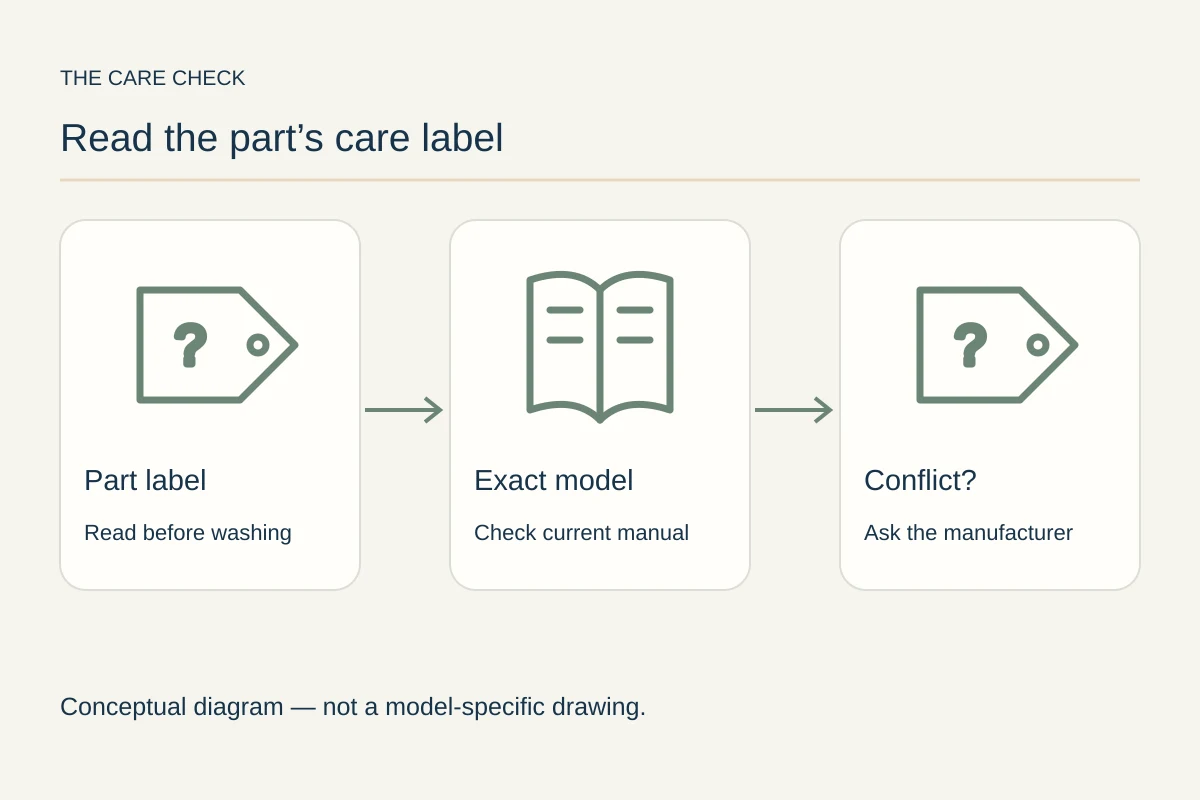
To clean a stroller, read the care label on each part and the current manual for your exact model first. Remove dry dirt, clean each part by its own instructions, and let everything dry fully before putting it back together. If documents conflict, use the gentler method, such as wiping or hand washing, or ask the manufacturer.
One washing rule does not cover a whole stroller. Bugaboo’s general cleaning guide says most of its stroller fabrics can go in the machine, with exceptions, at no more than 30°C/86°F. Its Butterfly 2 US page instead says to hand wash the seat fabric, sun canopy, and basket. Only the seat inlay is listed as machine washable at 86°F.
Joolz’s US Aer² page says fabrics cannot go in the washing machine. The February 2025 international Joolz manual says they are machine washable. That manual copy is hosted by a retailer. Neither difference should be hidden or treated as permission to ignore your part’s label.
Remove loose dirt before adding water
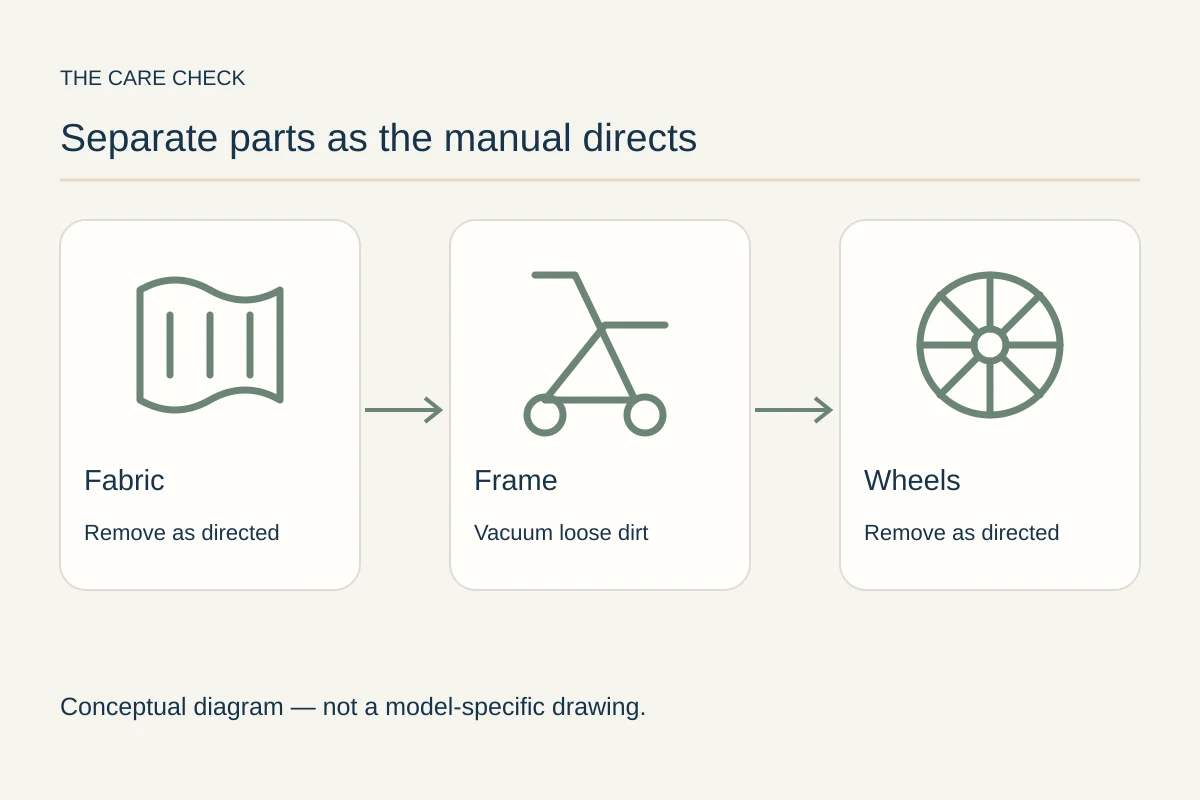
Follow the manual to remove detachable fabric and wheels where removal is described. Bugaboo’s cleaning guide starts with taking the stroller apart, then vacuuming crumbs and dirt around the seat and footrest.
Before washing, remove any foam inserts or stiffeners as directed by the care label. Bugaboo’s Butterfly 2 manual also says to remove panels. These are the firm pieces inside the fabric; do not assume they belong in the wash.
Plan for time without the stroller. Ergobaby’s Metro 3 care instructions say not to use it without the seat pad. A pad still drying is not a reason to use the seat without it.
Wash fabric by the part, not the brand
The care table under “The documented details” below separates the seat, canopy, basket, and pad. It records what the checked sources say, including conflicts. It does not replace the label on your own part.
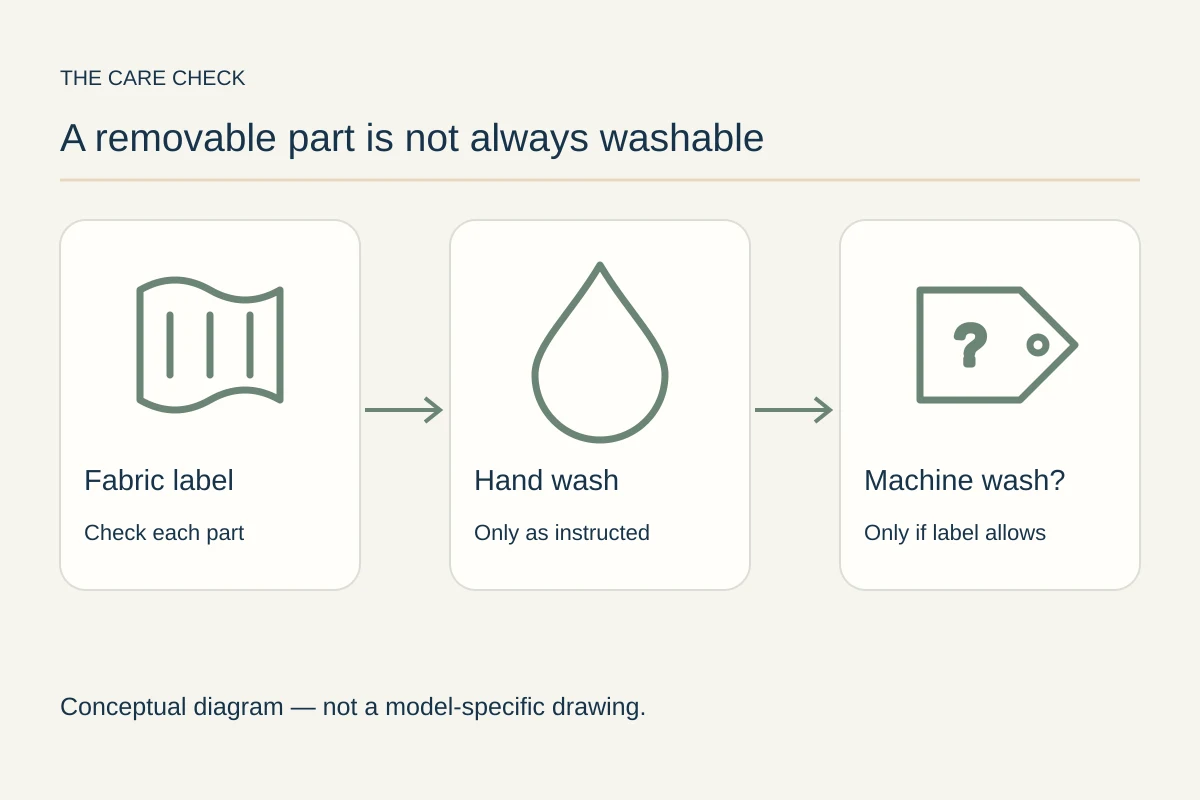
For fabric that is not machine washable, Bugaboo’s general guide describes warm water, a small amount of mild soap, and a cloth. Wipe away soap residue and air dry. A surface-clean-only label means wiping the surface; do not treat it as permission to soak the part.
If the label allows machine washing, follow its cycle and temperature. Bugaboo’s general guide specifies a delicate cycle at no more than 30°C/86°F with gentle detergent. Ergobaby’s Metro 3 instructions specify cold washing with mild detergent for the upholstered seat pad. Its seat base, sunshade, and other fabric areas are surface clean only.
Bugaboo’s guide rules out bleach, tumble drying, dry cleaning, and ironing. Ergobaby says no bleach on the seat pad and calls for air drying. Joolz’s manual also says never to use bleach. Do not turn these examples into one universal wash setting.
There is another Bugaboo difference: the non-US Butterfly 2 manual lists machine washing for the sun canopy and wiping for the basket. The US product page says hand washing for both. Check your model’s current US instructions and the label before choosing a method.
Wipe the frame and brush the wheels
Use the frame instructions for your model. Bugaboo’s Butterfly 2 manual describes a soft towel with lukewarm water, followed by a dry cloth. Joolz’s US page calls for a lukewarm wet cloth on the chassis, meaning the frame, with no detergent needed. Ergobaby allows a damp cloth and mild detergent on plastic and metal parts.
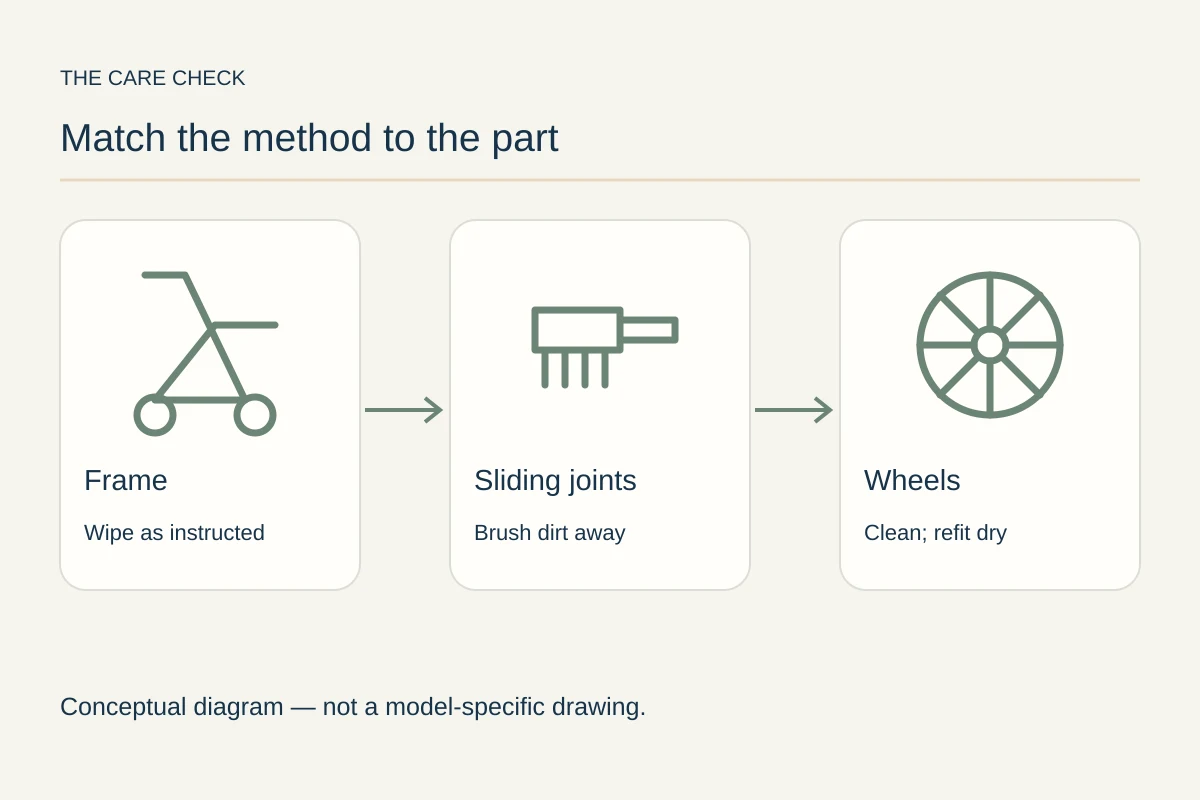
Bugaboo describes a soft brush for crevices and mechanisms. Brush dirt away from sliding joints, where parts move against each other. Its manual says to clean wheels with a brush and water, and occasionally remove them to brush sand from inside the axle.
Joolz’s US page says to remove the wheels, clean with water and mild detergent, and put them back once dry. Its manual warns that acidic cleaners or grease can stain coated aluminum. Avoid vinegar on an Aer² frame. The same manual calls for Teflon or silicone spray on wheels and metal parts about monthly; that is a Joolz instruction, not a rule for every stroller.
Bugaboo’s manual says the stroller is not resistant to salt water. Ergobaby’s manual says to keep abrasive dirt and moisture out of the handlebar and folding mechanisms. Dry them with a soft cloth if wet. It also calls for regular checks of rivets, screws, and safety devices, plus wheel inspection and replacement when needed.
Dry every part fully before reassembly
Bugaboo’s guide says to let all parts air dry completely before putting the stroller back together. Do not reassemble it while fabric or other parts are still damp.
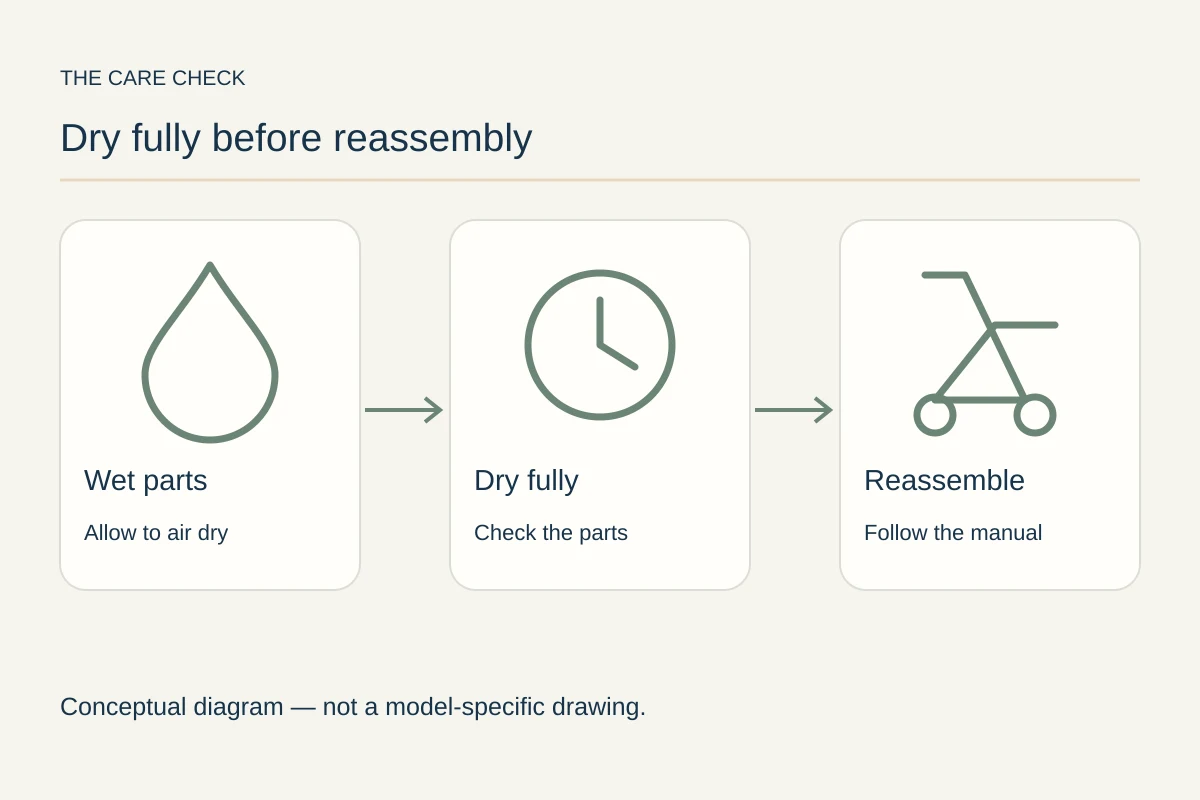
EPA’s general moisture guidance says that when wet items are dried within 24–48 hours after a leak or spill, mold will not grow in most cases. That is not a promised stroller drying time. Check that the parts are fully dry rather than relying on the clock alone.
Follow the drying instructions too. Bugaboo says not to tumble dry fabric. Joolz’s US page says to dry fabric flat. Ergobaby’s manual warns against too much sun or heat because it can cause fading or warping.
Treat mold differently on hard and porous parts
EPA’s home-cleanup advice says to scrub mold from hard surfaces with detergent and water, then dry them completely. This is general guidance, not a stroller cleaning test. Keep your model’s material-care limits in mind.
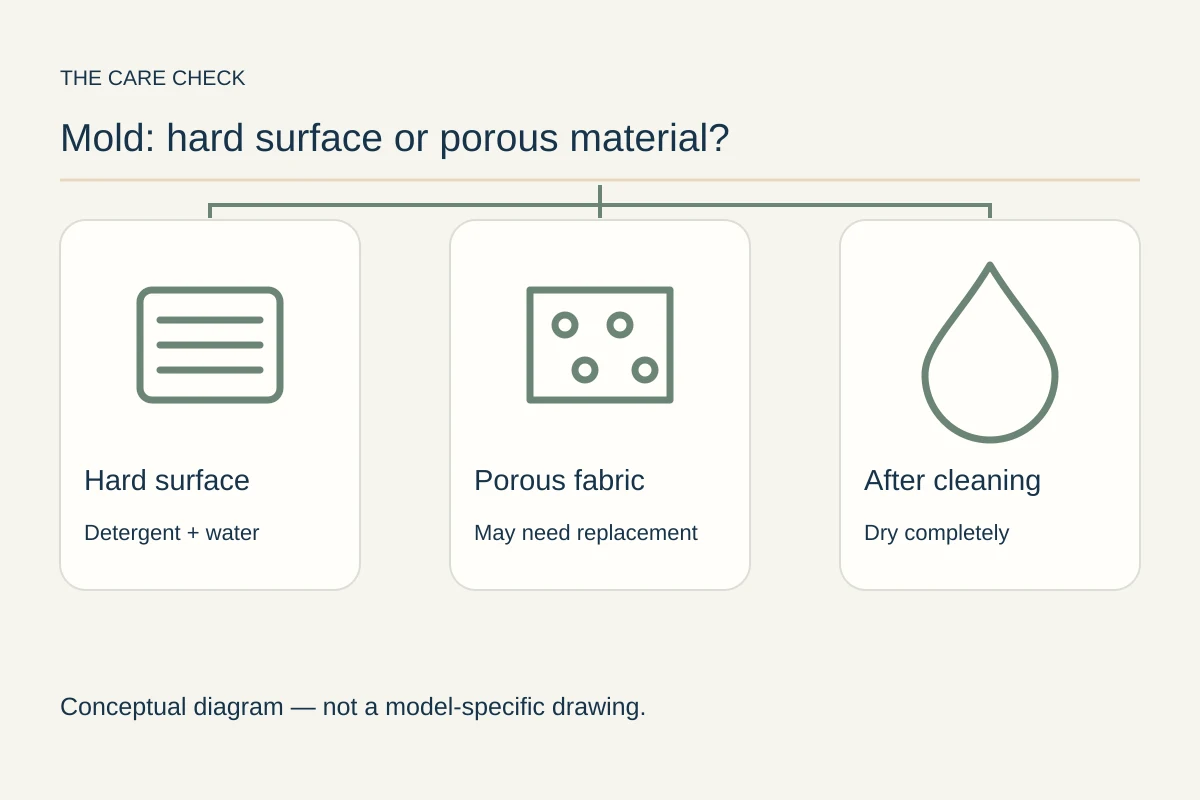
Porous materials have small spaces that can hold mold. EPA says absorbent or porous items may be difficult or impossible to clean fully and may need to be thrown away. Stains can remain even after cleaning. If mold persists on a fabric part, ask the manufacturer about an approved replacement. Ergobaby’s manual requires its approved replacement parts.
Bleach is not EPA’s routine recommendation for mold cleanup. The checked fabric instructions from Bugaboo, Joolz, and Ergobaby also say not to use bleach. Never mix chlorine bleach with ammonia or cleaning products that contain ammonia.
None of the checked sources recommends vinegar for stroller mold. Joolz specifically warns against acidic cleaners on the Aer²’s coated aluminum frame. Do not assume a household mold remedy suits every stroller material.
If you have health concerns, EPA advises speaking with a health professional before starting cleanup.
Check a secondhand stroller before cleaning it
Before spending time washing a used stroller, check recalls at cpsc.gov/recalls. CPSC advises this before buying or selling a used product. It also says strollers must meet the mandatory federal standard, 16 CFR part 1227.
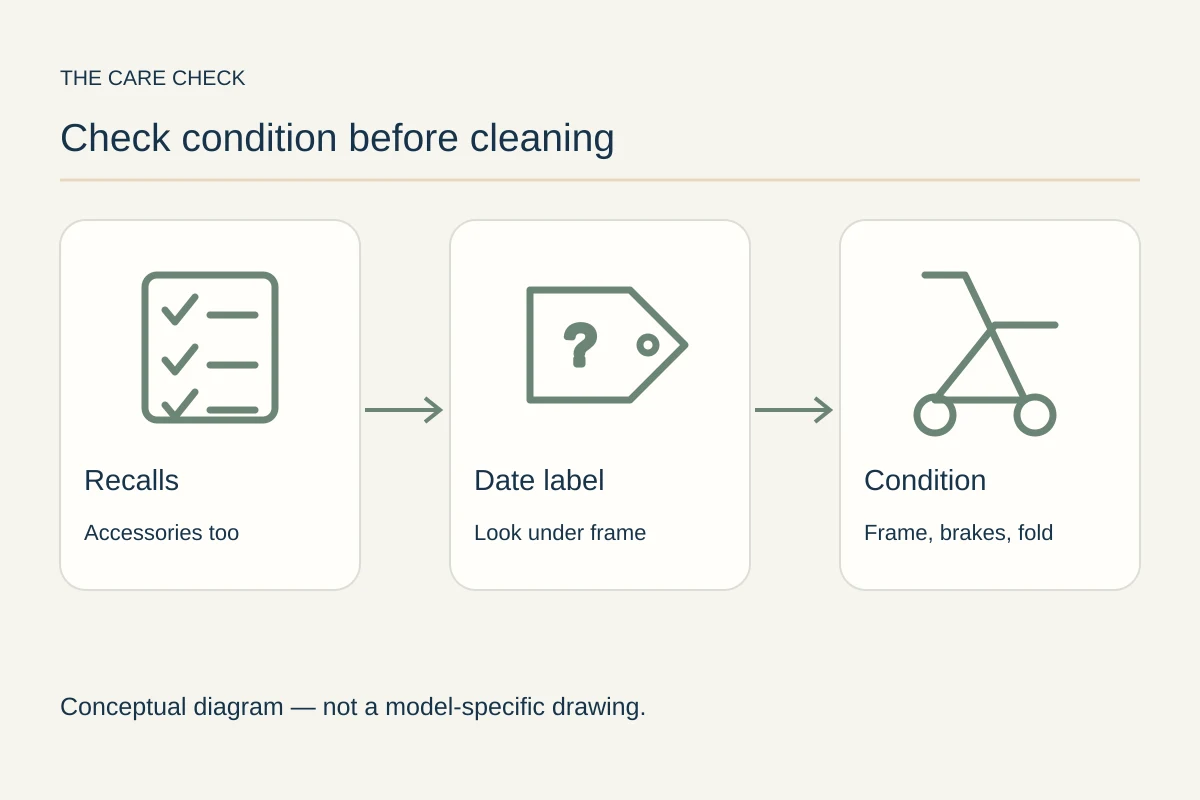
Check accessories too. For example, Joolz recalled Aer² car-seat adapters; its notice says the stroller itself is not affected. A clean stroller does not settle whether an attached accessory has been recalled.
Consumer Reports recommends a stroller made after September 10, 2015, when the federal standard became mandatory. Look for the manufacture date on the label under the frame. Inspect the frame for dents, cracks, and missing bolts. Check the recline, brakes, and any swivel-wheel locks. Follow the manual to check folding and unfolding.
Get the manual from the manufacturer if it is missing. Ergobaby’s manual says not to use a stroller with a damaged, broken, torn, or missing part. Cleaning does not resolve those defects.
The documented details
| Feature | Joolz Aer² | Bugaboo Butterfly 2 | Ergobaby Metro 3 |
|---|---|---|---|
| Seat fabric | Hand wash, mild detergent (US page) | Hand wash (US page) | Seat base: surface clean only |
| Sun canopy | Fabrics: hand wash (US page) | Hand wash (US page) | Sunshade: surface clean only |
| Underseat basket | Not stated | Hand wash (US page) | Not stated |
| Seat inlay or pad | Not stated | Inlay: machine wash at 86°F | Pad: machine wash cold; air dry |
| Frame | Lukewarm wet cloth; no detergent | Lukewarm water; dry cloth (non-US manual) | Damp cloth and mild detergent |
| Wheels | Remove; water and mild detergent; refit dry | Brush and water (non-US manual) | Inspect; replace if needed (manual) |
| Where the sources disagree | US page: no machine wash; international manual: machine washable fabrics | General guide: most fabrics machine washable; US page: hand wash seat/canopy/basket; non-US manual: machine wash canopy, wipe basket | US page and NA manual agree on pad and surface cleaning |
A few questions, answered.
Show your work
Sources and method
We checked the sources below on October 19, 2026. Product dimensions and features are manufacturer-reported. Our recommendations are editorial interpretations of that information; we have not tested these products. Amazon supplies current listing titles, images, and retailer links when available. Those listings are not evidence of performance.
- Bugaboo US: How to clean your stroller
General brand guide; model and part labels take priority.
- Bugaboo US: Butterfly 2 care instructions
US page separates hand-washed fabric from the machine-washable inlay.
- Bugaboo: Butterfly 2 user guide
Non-US edition; differs from the US page on the sun canopy and basket.
- Joolz US: Aer² care instructions
US page says hand wash fabrics; no machine washing.
- Joolz: Aer² international manual
Joolz manual, Feb 2025 international edition, copy hosted by a retailer; says fabrics are machine washable, unlike the US product page.
- Ergobaby US: Metro 3 care instructions
Seat pad and other fabric areas have different care methods.
- Ergobaby: Metro 3 North American manual
NA edition; maintenance, cleaning, damage warnings, and approved parts.
- US EPA: Mold Cleanup in Your Home
General home mold guidance, not stroller-specific instructions.
- US EPA: A Brief Guide to Mold, Moisture and Your Home
General moisture and mold guidance; not a stroller drying-time guarantee.
- US CPSC: Stopping the Online Sale of Recalled Products
Used-product recall checks and the mandatory stroller standard.
- Consumer Reports: Buying used baby gear
Used-stroller date label and condition checklist; no test findings reused.
- Joolz US: Aer² car-seat adapter recall
Recall concerns the car-seat adapters; Joolz says the Aer² stroller itself is not affected by this recall.